
How we think about executive content, the content pillars we build for our clients and how to turn them into an actual plan.
You might think it's a bit far-fetched to apply a 2,300-year-old concept to modern B2B executive communication on social.
But I like to think of LinkedIn as an always-on keynote speech.
When you step on stage, you talk about yourself and what you're building. You tell a story, maybe bring data, show some numbers and case studies.
And according to Aristotle's triangle, a persuasive argument works with three appeals: ethos, pathos and logos.
Social content is the same. The "argument" is just spread out over months.
So we translated it into a modern version, the 3C Content Framework. The Cs stand for Credibility, Connection and Capability.
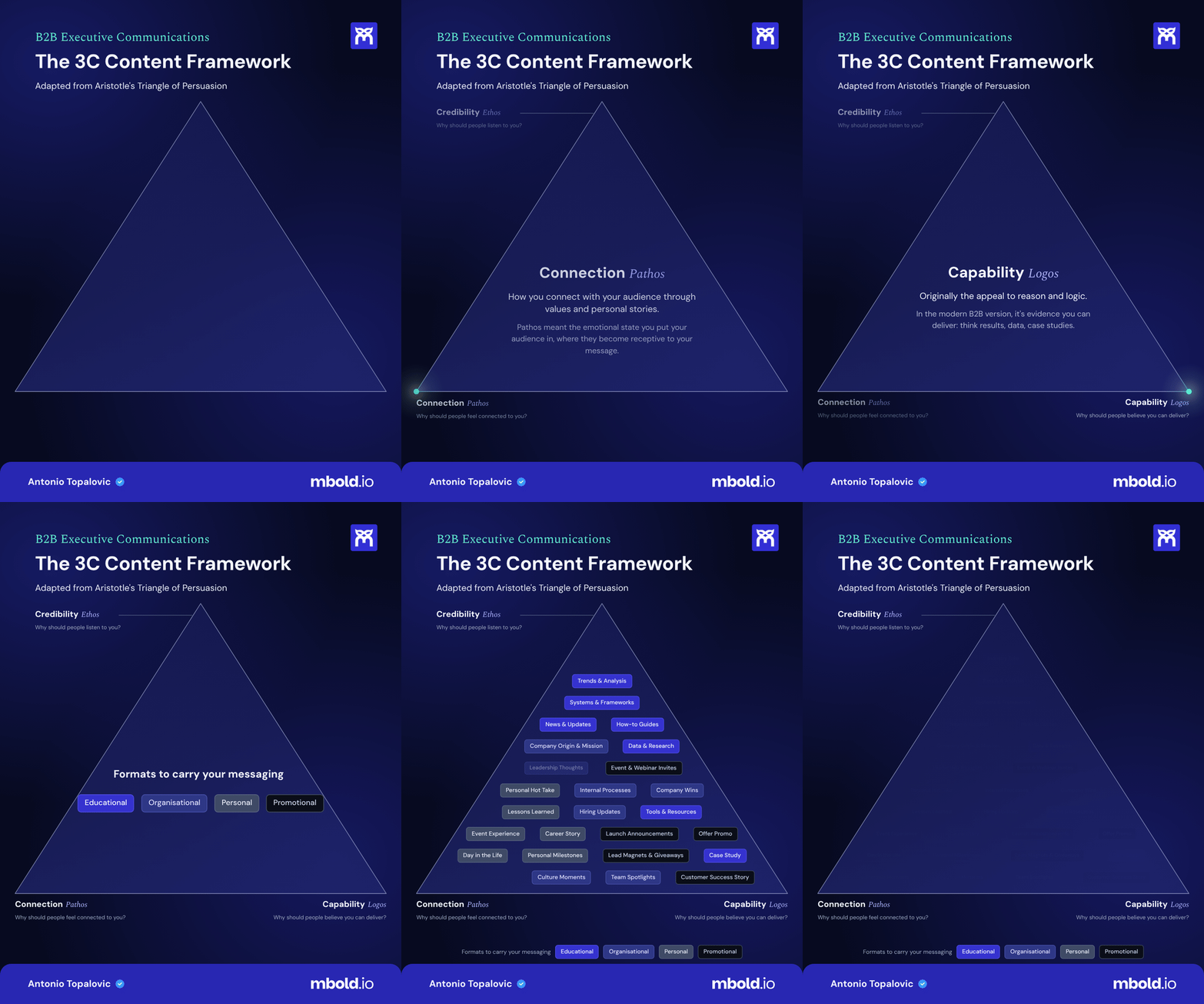
Why someone should listen to you. This is your unique experience, your authority, your education, expertise, your point of view or research.
How you connect with your audience. Pathos meant the emotional state you put your audience in, where they become receptive to your message. It's your personal stories, showing your values and making the audience feel understood.
Originally the appeal to reason and logic. In modern B2B communication, it's the evidence that you can deliver: results, data, case studies, resources and your people.
I like this framework because it looks at both sides: what the speaker needs to be seen as credible, and what the audience needs to trust them.
In my work with founders and executives it has proven useful in two ways.
Most teams are heavy on capability, posting only marketing announcements, case studies or new feature drops. Others lean too personal because it gets the best engagement.
But a good content plan balances all three.
Once we've decided on the content pillars, we fill in the formats we want to use and plan them in our content calendar. The infographic shows all the ones we work with, and there's plenty to choose from (not every format fits every personal brand though).
Take your last 10 posts: which corner are you stuck in?